
Council hears from architect on city hall space utilization study
Trending
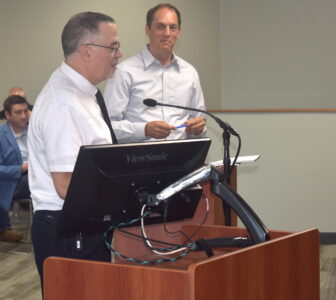
Des Moines-based Architect Cory Sharp of FEH Design appeared before the Marshalltown city council on Monday night to return to the topic of city hall space utilization and the fate of the old city hall building at 24 N. Center St., which is over a century old, connected to the former library (Carnegie building) and the newer Parks and Rec building and is currently housing a small number of city employees, including the city administrator and finance director.
City Administrator Carol Webb explained that the board consulted with an engineering firm to study HVAC improvement options, and during that process, several key deficiencies were identified. Given that reality, there were questions about whether the city should even continue to own the building.
Sharp then introduced himself to the council, noting his company's history working on projects in Marshalltown, before diving into the findings of the study regarding all three buildings. The Carnegie and Parks and Rec building were found to be in good condition, and the plan he presented would move the city administrator, city clerk, human resources director, finance and accounting functions to the Parks and Rec building while creating a new mayor's office and moving other offices around to accommodate the changes.
After breaking down more of the details on what would be improved, Sharp recommended completing the project in phases.
"You could do this project all at once and move all of your staff into the old city hall, but you would have pretty big problems with accessibility. You'd have pretty big problems with moving your staff into a space that does ACM, does have hazardous materials in it that you'd be working in," he said. "You're not currently working in a lot of those spaces because they're in vacated upper floors, but you'd have to occupy basically that entire building with your staff if you want to do this at one time."
Finally, he discussed the future of the old city hall building and what would become of it under the proposed plan, suggesting that a private buyer could qualify for historic preservation tax credits and grants. One concern, he said, is that it only has one stairwell, which would limit the occupant load for the prospective buyer, and Sharp felt that artist suites, business suites or hospitality spaces could make sense.
The estimated construction cost for the proposal is between $985,000 and $1.1 million, and as Sharp opened the discussion up to the council, questions about records storage, heating the old city hall building until it is sold, a timeline for each phase of the project, impacts on access points and how much time the current HVAC system at the old city hall has left. Sharp projected six to eight months per phase with two phases.
Public Works Director Heather Thomas told the council the shared boiler between the old city hall building and the neighboring YSS building, which formerly housed the Marshalltown Police Department, is "limping along." Councilor Gary Thompson wondered if the two buildings could be separated once the old city hall is sold, and Sharp believed there was some sort of mutual easement in place. In response to a question from Councilor Melisa Fonseca, Webb said any of the options would require bonding in order to cover the costs and could be subject to a reverse referendum public vote depending on the size of the project.
Councilor Mark Mitchell asked if YSS would share in the expense for the HVAC repairs, and Thomas said the most likely outcome would be separating the services from each other. Thompson wondered about financing mechanisms and whether pulling certain items from the project to avoid the reverse referendum threshold would be "a little shady," and Finance Director Cole O'Donnell agreed that it would be.
"What it is is you can try to bond this year for a certain amount and bond another year for a certain amount, but I think that somebody would call that into question. And the threshold is actually around $980,000 (or) $985,000," he said.
The estimate only includes hard construction costs. Ultimately, Thompson felt the council needed more information before moving forward, and Councilor Sue Cahill wondered how much the old city hall building might potentially go for in a private sale. It is assessed at $1.5 million, but given its condition, O'Donnell predicted it would sell for less than market value. The council did not take official action but agreed to allow Webb to bring back more specific information before pursuing a course of action.
Contact Robert Maharry at (641) 753-6611 ext. 255 or rmaharry@timesrepublican.com.