
Past Times: Many Marshall County villages have passed into oblivion — Part two
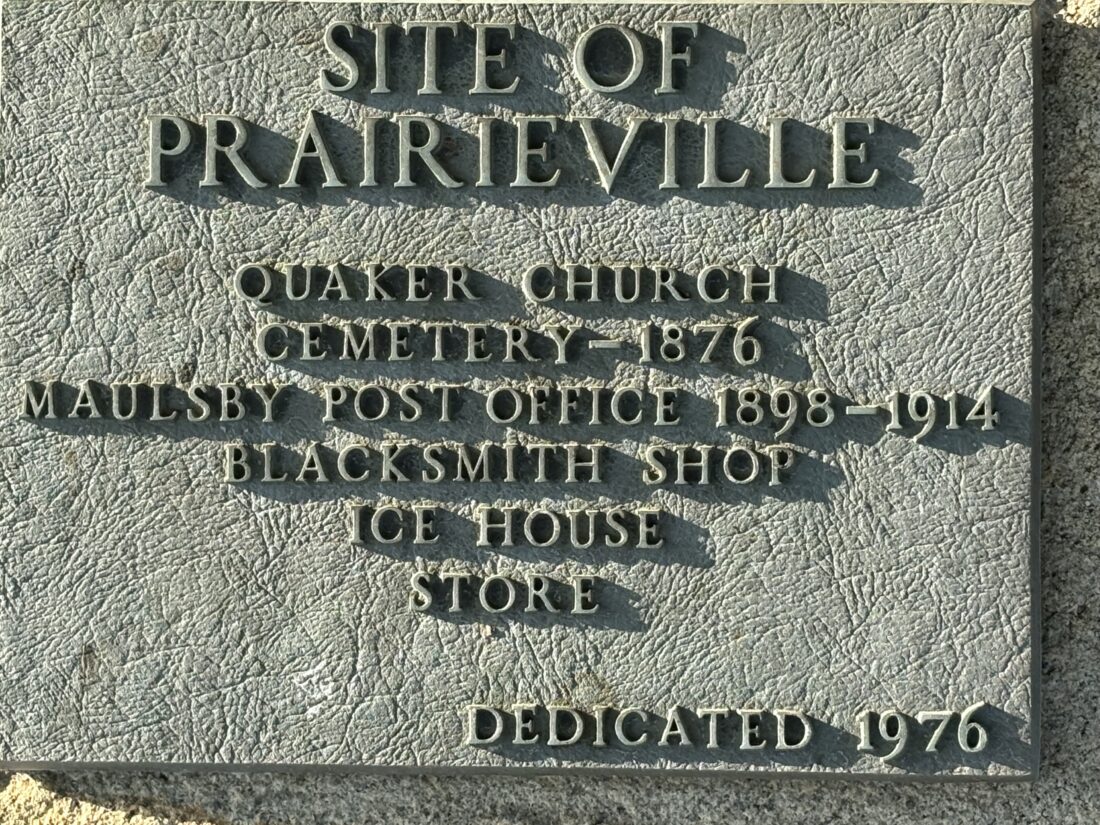
PHOTO BY GARRY BRANDENBURG Pictured is a plaque identifying the site of the defunct Prairieville village near Albion. The plaque reads: "Site of Prairieville, Quaker Church, Cemetery 1876, Maulsby Post Office 1895-1914, Blacksmith Shop, Ice House, Store.”
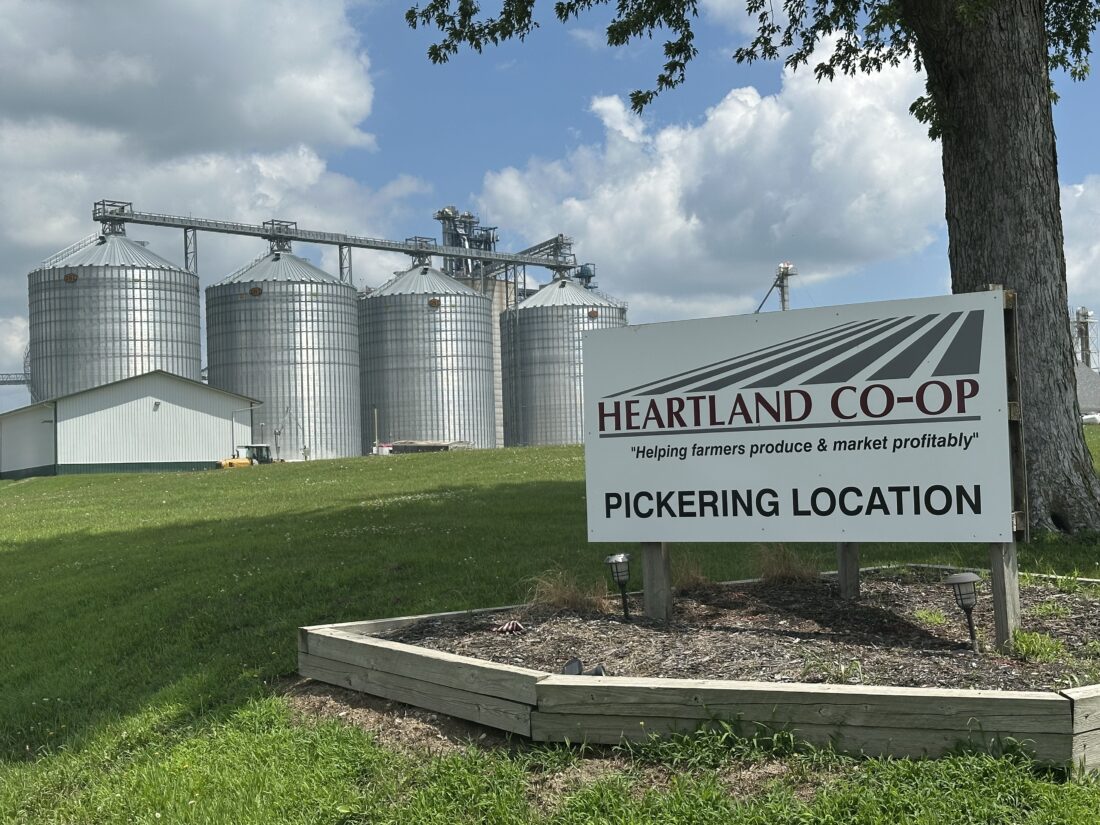
T-R PHOTO BY MIKE DONAHEY Shown recently is Heartland Cooperative's Pickering facility at 3111 290th St., Gilman. Originally Pickering was a village with a station shop at the junction of the M&St.L. and C.M.&St.P railroads. A Union Pacific Railroad spur line serves the facility now.
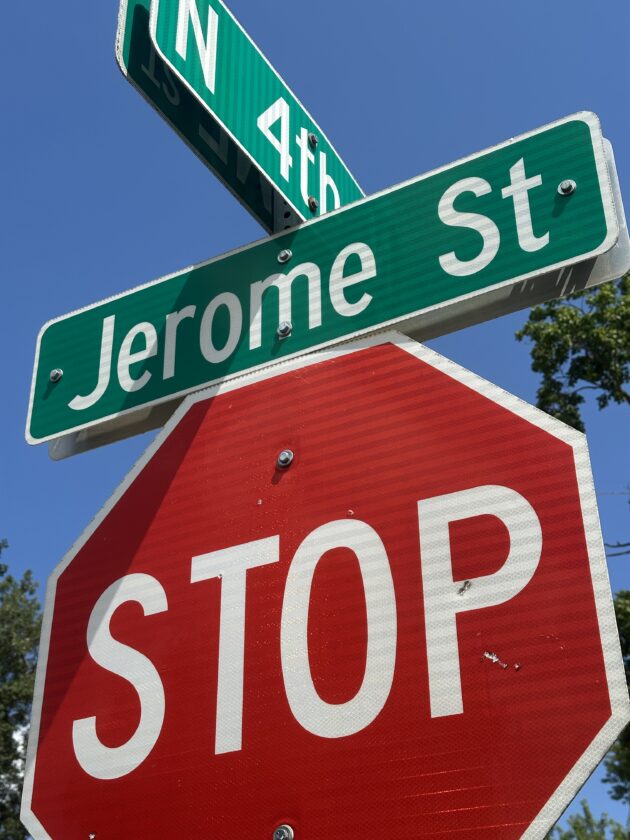
T-R PHOTO BY MIKE DONAHEY Shown recently is a Jerome Street sign in Marshalltown. The street may have been named for the now defunct village of Jeromeville. It was directly north and east of Marshalltown and north of the Iowa River off of Highway 14.
PHOTO BY GARRY BRANDENBURG Pictured is a plaque identifying the site of the defunct Prairieville village near Albion. The plaque reads: "Site of Prairieville, Quaker Church, Cemetery 1876, Maulsby Post Office 1895-1914, Blacksmith Shop, Ice House, Store.”
T-R PHOTO BY MIKE DONAHEY Shown recently is Heartland Cooperative's Pickering facility at 3111 290th St., Gilman. Originally Pickering was a village with a station shop at the junction of the M&St.L. and C.M.&St.P railroads. A Union Pacific Railroad spur line serves the facility now.
T-R PHOTO BY MIKE DONAHEY Shown recently is a Jerome Street sign in Marshalltown. The street may have been named for the now defunct village of Jeromeville. It was directly north and east of Marshalltown and north of the Iowa River off of Highway 14.
Trending
Editor's Note: This is part two of a two-part series about former villages of the 1850s to 1920s. Part one was printed in the June 19 and 20, 2026 "Preserving the Past," as part of that Times-Republican (T-R) edition. It reported on the defunct villages Biven's Grove through Liberty. The primary source for this series is the June 30, 1953 T-R and "The Continuing History of Marshall County, Iowa 1997." Some road names and other details changed over a period of 73 and 29 years respectively, Revisions were made where necessary.
Marshall County's first settlers were the Davidson family of Washington County, Iowa.
"On May 15, 1846, Joseph Davidson, 26, his spouse, Mary Ann (nee Ferrin) Davidson and their son Lucien -nearly two -staked their claim on land approximately one and one-half miles north of present day Le Grand," according to "The Continuing History of Marshall County, Iowa 1997." The Davidsons, with the help of Joseph's brother and a Tama County settler, built a cabin without windows or a fireplace. Later with their oxen, they plowed 30 acres and planted corn, potatoes, pumpkins, watermelons and more the first year.
They had mostly friendly visits from the neighboring Meskwaki people and shared watermelons or traded them for provisions.
Over the years Lucien became the oldest sibling to three brothers and a sister.
In 1859, the Davidsons sold their farm to Ami Willits - a neighbor – and moved to Oregon."
Pioneers following the Davidsons also had ambitious vision of prosperity on farms or in villages.
In some instances, surveys were made and names bestowed before more than a few settlers had set down roots.
When economic conditions were favorable, blacksmith shops, stagecoach trails, railroads, railroad depots and more commerce followed.
One village which passed into oblivion was Jeromeville -- a former "suburb" of Marshalltown. It was north and east of the former Third Avenue highway (now Iowa Highway 14 N.) and north of the Iowa River. It was platted on July 6, 1857. Later, Jerome Street became and remains part of Marshalltown's street system.
Today, other remnants of long-forgotten villages in the county are avenue signs - such as Lafayette (re-named Albion in 1858) and Prairieville. In other instances, cemeteries and oral histories passed down by residents serve as reminders.
The villages were:
LURAY, in section 19 of Timber Creek township, once had a large elevator and was a grain shipping point. It had a depot on the Chicago Great Western (C&GW) Railway - formerly the old diagonal route of the Wisconsin, Iowa & Nebraska (WI & N) Railway. Luray was plated Dec. 13, 1897 by T.S. Cartwright.
MALTA, an old railroad station stop on the long-extinct State Center branch of the Central Iowa Railway where it crossed the State Center-Washington township line north of Melbourne.
MINERVA CREEK POST OFFICE (P.O.), first located a half-mile east of the present town of Clemons, later moving to the present Minerva site where Tom Nichol's farm was plated for a village site.
MINERVA JUNCTION, southeast of the former village of Marietta, was a hamlet where the now defunct Story City branch joined the former Minneapolis & St. Louis Railway (M&St.L).
MONINGER STATION, three miles west of Albion on the Story City branch of the former M. & St. L. was a depot station and store on the D.M. Moninger farm.
NEW JEFFERSON, platted by Andrew Smith May 19, 1875, was where the Timber Creek post office was previously located.
PICKERING, surveyed in February 1882, was a station stop at the junction of the M & St.L., and Chicago, Milwaukee & St. Paul (C.M. & St.P) railroads half-way between Ferguson and Dunbar. At one time, it had a two-story station depot, small store and grain elevator.
PIERCE, an old station stop on the WI&N Railway and later C&GW. It was located at the far east edge of the county in section 25 of Vienna township.
ROCKTON, in section 21 of Marion township, was an old railroad spur and station servicing the stone quarries between East Main Street Road and the "Old People's Home."
STANFORD, one mile east and two miles north of Bangor, was a Quaker settlement. A Friends seminary there was attended by 50 students in the late 1870s.
TIMBER CREEK, the first post office in the county was in Joseph Cooper's log cabin in the far northeast corner of Jeferson township. William Smith was the first postmaster in 1850.
VIENNA, a post station in Vienna township was on the northeast corner of the present intersection of Iowa Highway 96 and Marshall County Road T-29/Wallace Ave.