
How do difference-makers make a difference?
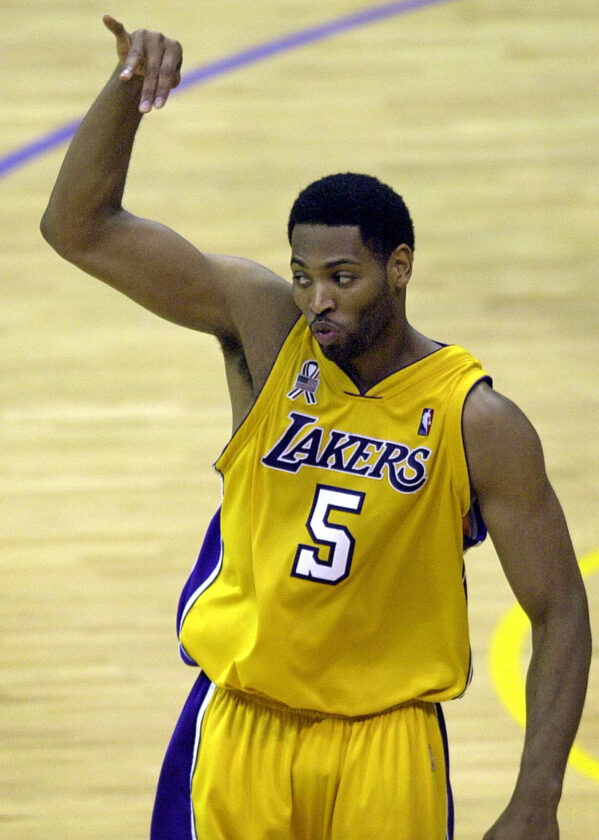
AP PHOTO Robert Horry, often referred to as “Big Shot Bob,” won a total of seven NBA championships with the Rockets, Lakers and Spurs despite never being a star player.
Recently I had a conversation about making a difference. The question was: how can a person without title, influence, or wealth make a difference? I offered up specific well-intentioned ideas but felt like I wasn’t quite hitting the mark.
I thought about it. I thought about the difference-makers I had known. I thought about the difference-makers I had seen. I thought about moments where difference-makers stepped up. I thought about Robert Horry in Game Four of the 2002 NBA Western Conference Finals.
Horry’s two-time defending champion Lakers were on a quest to become a dynasty. The Lakers offense featured one of the deadliest one-two punches in basketball history. Opposing teams suffered a black-and-blue bludgeoning at the hands of Shaquille O’Neal, the solid iron battering ram steamrolling opponents on the front lines. Ascending star Kobe Bryant rounded out the juggernaut duo, launching and landing heat-seeking salvos like vintage Maverick taking down MiG fighters.
They faced the Sacramento Kings. The Kings were no cake walk. Sacramento had risen from being an upstart thorn-in-the-side to a fearsome title contender.
Their big men were smart and skilled. Their shooters stalked the three-point line, ready and able to make defenders pay. They played as a team. Their defensive specialists had the stickiness of super glue. They had no fear of the mighty Lakers. The Sacramento Kings knew their time had come.
It was Game Four in Los Angeles. The Kings led by two points with ten seconds remaining. A win would put Sacramento in a dominant three games to one series lead.
The Lakers had the ball. Coach Phil Jackson drew up the plan. Everyone knew Kobe Bryant would get the ball. The plan was simple: put the ball in Kobe’s hands, open the right side of the court, and give Kobe room to drive right for a look at the basket.
Shaq would be ready and available by the hoop. Sharpshooter Derek Fisher and Robert Horry spaced themselves outside the three-point line within Kobe’s field of vision, Horry at the top of the three-point line.
Bryant drove to the right with a defender glued to his hip. The double-team arrived, and Bryant’s shot missed. Having been abandoned by his defender, Shaq snagged the rebound and rose for a layup. Superman would not save this day. The ball bounced off the rim.
Enter Vlade Divac. Divac, the Kings’ big man, had been jettisoned by the Lakers as part of the blueprint in assembling the Shaq-Kobe championship duo. The Lakers had seen Divac as expendable.
This was his chance to make them pay. Divac reached out and batted the ball away from the two Lakers superstars. The ball would bounce past halfcourt. The clock would run out, and the Kings would leave Los Angeles having ripped the purple and gold hearts out of every Angeleno.
But there was Horry. His team needed him. He was present and in the moment. He’d been a Laker through two championship runs. He’d ridden the highs and lows of the Shaq-Kobe relationship.
He hadn’t refused to go on the court because the play wasn’t drawn up for him. He hadn’t feigned illness. He hadn’t hidden in the locker room. He was there when his team needed him most. He was available.
The ball bounced to Horry. Horry stepped up and into his shooting motion. It was a catch-and-shoot. He lined up his body, beginning his rise, lift, and release. It was the kind of shot players practice routinely and with repetition.
As Horry would later describe, “I’ve been doing that for all my career.” He had prepared himself. He knew what to do. He was ready.
Horry didn’t defer to Shaq. He didn’t force a pass to Kobe. He didn’t look for someone to bail him out. Being available and ready, he moved through the shooting motion naturally.
But there was more to it than just being available and ready. Horry had to also be willing. He rose, lifted, and released as the defender closed out on him. He was willing.
A championship run was on the line. His teammates and coaches were counting on him. The ball soared through the air. Staples Center held its collective breath. The game clock expired. The horn blew. The ball shot through the net. Horry drained the three-pointer.
He made a difference. The Lakers won by one point. The cheers blew the lid off the Staples Center. The towel boy rushed the court. Horry’s teammates embraced him. It was a one-in-a-million shot, a transcendent moment in sports.
There’s no set blueprint or recipe for making a difference, but there are a few key ingredients. When Horry’s team — his community — needed him to make a difference, he was available, ready, and willing. Being available, ready, and willing were the three key ingredients to his success.
He wasn’t Shaq or Kobe. He wasn’t an All Star. He’s someone you’ve probably never heard of. However, because Robert Horry was available, ready, and willing he retired in 2008 as a seven-time NBA champion. He was never the team’s star, but he was on the court whenever his team needed a difference-maker. He made a difference by being available, ready, and willing.
That’s all it takes to make a difference. Those are the key ingredients. The blueprint.
Be available to listen to your kids tell you about their day. Be ready to mow your neighbor’s yard when they are recovering from surgery. Be willing to let the mother with the screaming baby go in front of you at the checkout. There are opportunities to make a difference bouncing our way every day.
When opportunity strikes and the ball bounces to you, will you be available, ready, and willing?
——
Jordan Gaffney is the
Marshall County Attorney.
Columnists

Planting seeds of prosperity for the future
Bible Truth nor Tradition: The doctrine of the sovereignty of God?
Many popular Reformed Theologians like John MacArthur and RC Sproul relied on the work of John Calvin in defining ...
From the Mayor’s Desk: I’m bored!
Acouple months ago, one of the stories on Channel 13 News caught my attention. In front of the Des Moines City ...
Perfectionism and mental health
Perfectionism is a trait that makes life an endless report card on accomplishments or looks. When healthy, it can ...
AI for tech challenged seniors
The ad in the newspaper was tantalizing: “AI for seniors. 3 hours in two sessions offered by the County Extension ...
Price gouging is whose problem?
Horrors. The profiteers running this year’s World Cup are forcing fans to shell out thousands for a single ...